
In today’s world, it’s hard to escape the impact of artificial intelligence (AI). From self-driving cars to facial recognition technology, AI is changing how we live and work.
While some people love the convenience and efficiency that AI provides, others are wary of the potential consequences.
Despite the impact that AI is having on our lives, one thing that will always remain timeless is storytelling.
The power of personal experience stories cannot be understated. When someone shares their story, it creates a connection between the storyteller and the audience.
People trust the people who share their stories, and they’re more likely to be influenced by their message.
AI may be able to process large amounts of data quickly and efficiently, but it lacks the unique perspective of an experienced human.
Personal experience stories are a powerful tool because they offer a perspective that cannot be replicated by AI. When someone shares their story, they bring their personal experiences, emotions, and insights to the table. These elements can’t be replicated by a machine, and they’re what make personal experience stories so compelling.
When it comes to storytelling, there’s no one-size-fits-all approach.
Every story is unique, and every storyteller has their own style and perspective.
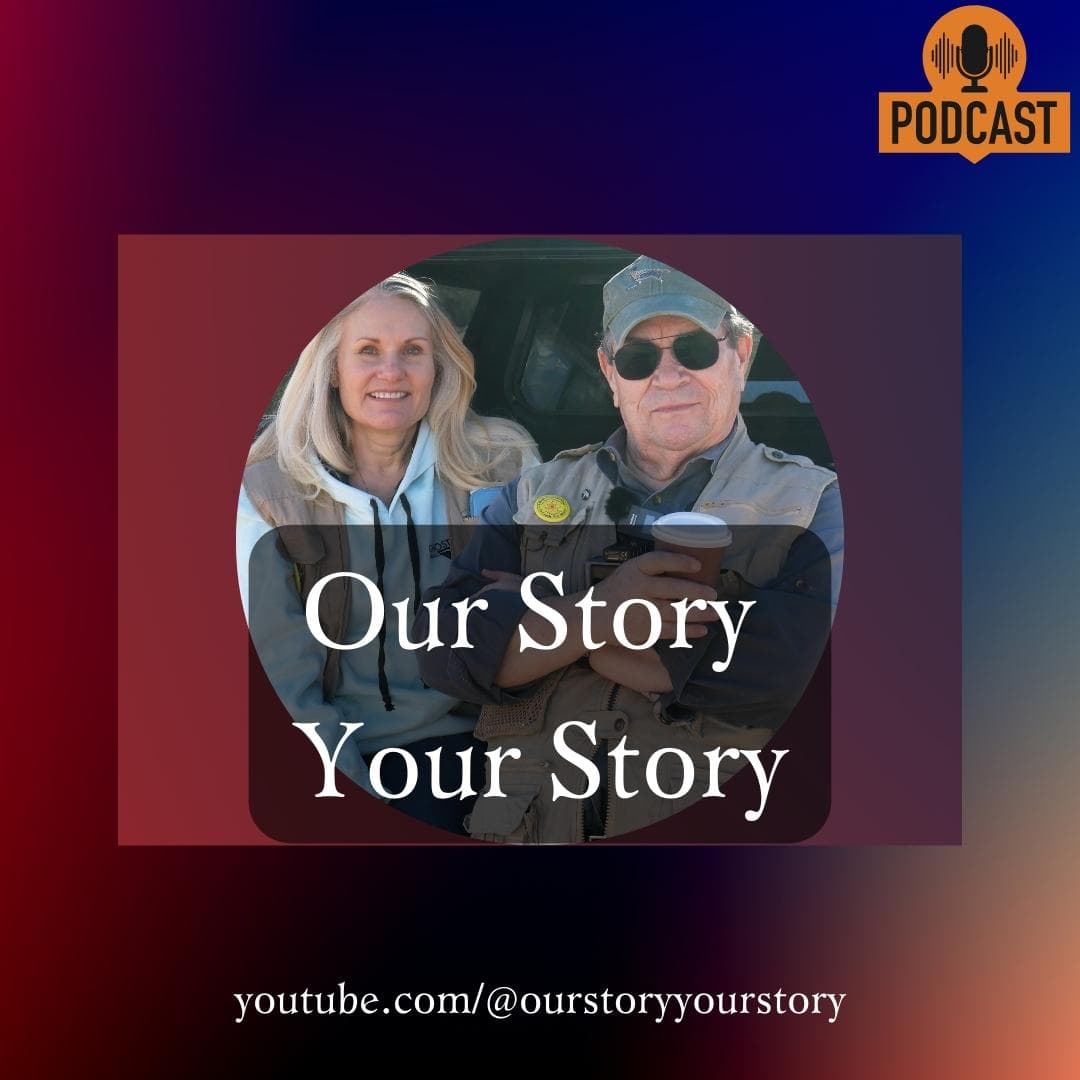
That’s why we’re excited to introduce our new storytelling YouTube channel, Our Story Your Story.
We believe everyone has a story to tell, and we want to provide a platform for people to share their experiences with the world.
Our channel will be unique because we will focus on real stories beginning with the life of my friend and business partner, Toby Younis. He is a man who has lived an extraordinary life and has many tales to share. Toby has experienced challenges, triumphs, and everything in between, and his stories offer a unique perspective that can’t be found anywhere else.
Through our video podcast, we hope to showcase the power of storytelling and demonstrate that even in a world dominated by technology, the human element will always be essential.
While AI can provide valuable insights and data, it can’t replicate the personal connection that comes with sharing a story.
Interviewing, writing, and telling the story of a loved one before they pass away or lose the ability to recall their memorable moments is an incredibly powerful and emotional experience. It’s a way to honor their life and preserve their legacy, and it can be a healing experience for both the storyteller and the audience.
Sharing the story of a parent, spouse, or friend can be a way to keep their memory alive and ensure that their life isn’t forgotten. It’s an opportunity to capture their personality, their passions, and their achievements, and to share them with future generations. By telling their story, we can honor their life and the impact they had on the world around them.
As time passes, memories can fade and become distorted, making it difficult to accurately remember a loved one’s life. By telling their story before it’s too late, we can ensure that their legacy is preserved in a way that’s true to who they were.
Last year for my mom’s 80th birthday, I planned to interview her and her sister to gather the stories of their lives. Then my mom had a stroke less than a month before her birthday. Now it is too difficult for her to remember or share her stories.
My husband has lost the ability to speak clearly enough to be understood due to cancer and surgery. It has become too difficult for him to share his stories as well.
These losses have motivated me to encourage my business partner to tell his stories now before it is too late.
Perhaps I can encourage you to tell your stories or the stories of your ancestors, too.
Telling the story of a loved one can be a healing experience for the storyteller. It can help to process the emotions that come with grief, and it can be a way to celebrate their life and the memories that were shared. By sharing their story with others, we can feel a sense of connection and support, knowing we’re not alone in our grief.
Our stories have the power to recall the legacy of our parents, grandparents, and other ancestors, and they play a crucial role in passing on that legacy to future generations.
By sharing the stories of our ancestors, we can help our children and grandchildren understand their heritage, where they come from, and the values and traditions that were passed down through the generations.
Through storytelling, we can share the triumphs and struggles of our ancestors, their achievements and their sacrifices, and the wisdom they gained throughout their lives.
We can also share the traditions and customs that were important to them, such as their religion, cultural practices, and family traditions. By doing so, we can keep those traditions alive to be passed down through the generations, or at least we can gain a greater understanding and appreciation of our ancestors.
Telling the stories of our ancestors can also be a way to preserve their memory and ensure that they’re not forgotten. By sharing their stories with our children and grandchildren, we can keep their legacy alive and honor their contributions to our family and society.
In addition to preserving the memory of our ancestors, sharing their stories can help us understand our own identity and place in the world. By learning about our family history, we can gain a deeper understanding of where we come from, the values that are important to us, and the experiences that have shaped us.
On the side of the road, a little red tricycle stood abandoned. Its tires were deflated, and the once-bright paint was now chipped and faded. A one-eyed teddy bear slumped on the seat, its fur matted and dirty. As cars rushed by, the tricycle remained motionless, a forgotten relic of childhood days gone by.
Concrete details are an essential element of storytelling, as they allow readers to connect with the story on a deeper emotional level. By providing specific, vivid details, we can evoke powerful emotions in the reader, such as joy, sadness, or nostalgia.
For example, consider the famous six-word story popularly attributed to Ernest Hemingway: “For sale: baby shoes, never worn.” This brief story is powerful because it provides a specific detail that immediately evokes an emotional response in the reader. The image of a pair of baby shoes that have never been worn is both concrete and deeply emotional, conjuring up feelings of loss, sadness, and regret.
Similarly, in the earlier example of the abandoned tricycle, specific details such as the deflated tires, chipped paint, and dirty teddy bear all serve to create a vivid image in the reader’s mind. This image, in turn, evokes emotions such as nostalgia, melancholy, and perhaps even a sense of longing for the simplicity of childhood.
But we can take those details and the story to a higher level by sharing more personal memories when we attach the tricycle to a real person.
If I tell a story about myself that really happened this week, then share a lesson I learned from what happened, it is much more likely to resonate with readers.
Concrete details are an essential element of storytelling because they allow readers to connect with the story on an emotional level. By providing specific, vivid, personal details, we can evoke powerful emotions in the reader, creating a lasting impact and helping to ensure that our stories resonate with our audience long after they’ve finished reading.
For instance, I’ve been cleaning out the garage this month. I went through dusty boxes sitting on a high shelf that haven’t been unpacked since we moved into this house 18 years ago.
Climbing on a step stool, I pulled down a box full of framed photos of my children when they were under 5 years old.
Pulling away the wrapping paper and bubble wrap, I found delightful memories peeking out at me.
I’d forgotten how beautiful they were with their chubby-cheeked baby smiles and cute little outfits sporting teddy bears and bows. I was surprised at how young, handsome, and happy my brilliant blue-eyed husband looked as he held our much-loved babies.
I wish I had appreciated them more at the time and it reminds me to live in the moment and appreciate them all the more now.
While personal experience stories offer a unique perspective that can’t be replicated by AI, there’s no denying the value that AI can bring to the table. AI can help to identify patterns, predict trends, and provide insights that can inform and enhance the stories that we tell.
By combining the power of AI with personal experience stories, we can create content that’s both authentic and unique.
We can use AI to identify patterns in the data and uncover insights that can inform the personal stories that we tell. This can help to create content that’s both relevant and engaging, and that resonates with audiences on a deeper level.
Moreover, by using both AI and personal experience stories, we can spark conversations and build communities that can come together to generate hope, comfort, and solidarity. This can help to create a sense of connection and support among our audience, as they share their own experiences and perspectives.
By creating content that’s both authentic and data-driven, we can engage our audience in a meaningful way and create a sense of community around the stories that we tell.
Leveraging the power of AI and personal experience stories, we can create content that resonates with our audience on a deeper level and creates a lasting impact.
If you have stories to share with the world, reach out to me at support@agkmedia.studio or schedule a video chat with us at consulting.agkmedia.studio.
Your stories matter.